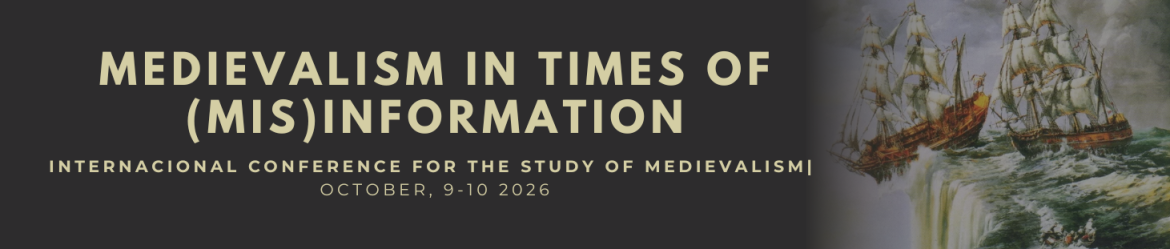
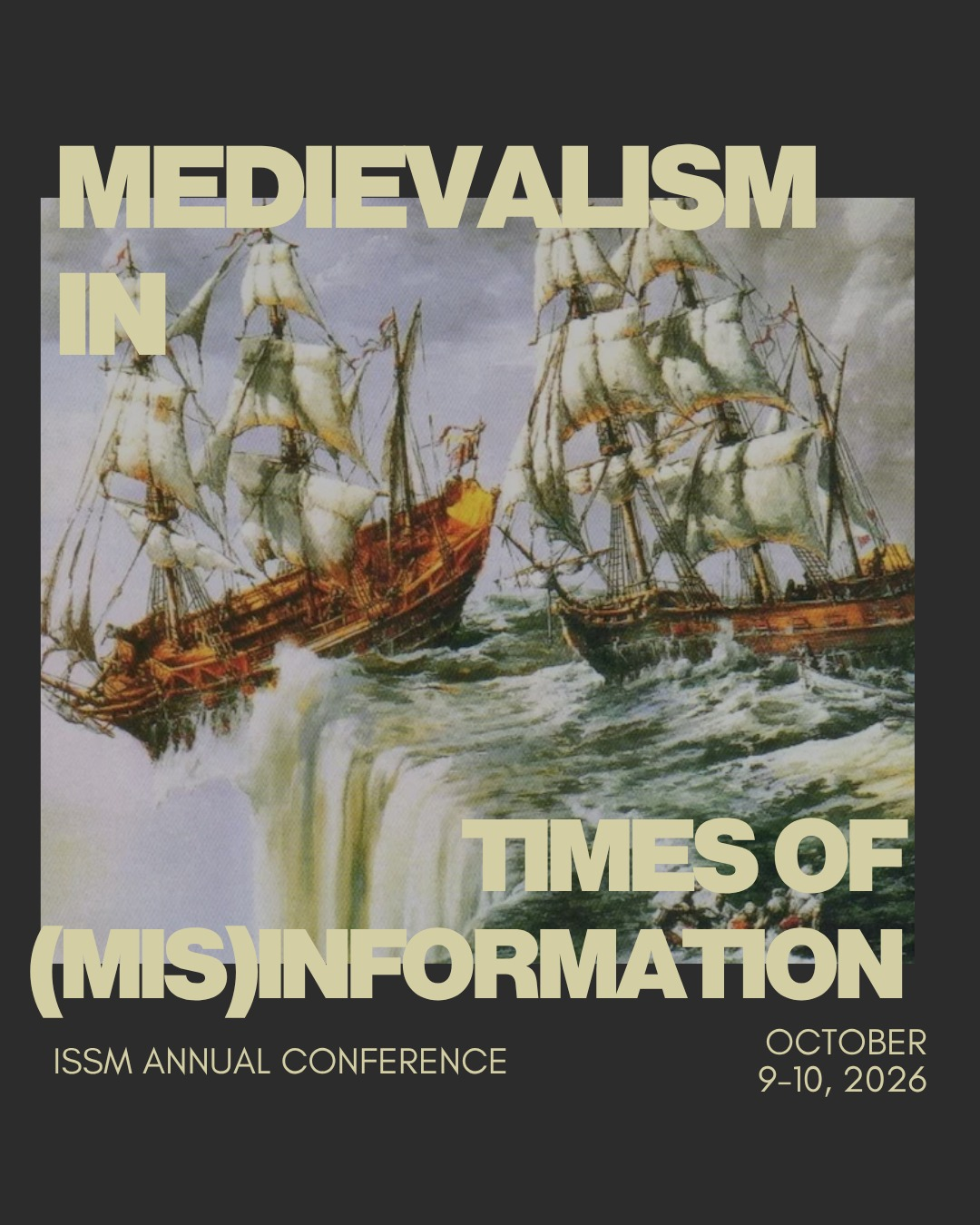
 In 1996, Carl Sagan warned us of a time when people would lose their ability to question, “when awesome technological powers are in the hands of a very few . . . when, clutching our crystals and nervously consulting our horoscopes, our critical faculties in decline, unable to distinguish between what feels good and what’s true, we slide, almost without noticing, back into superstition and darkness.” Maybe Mr Sagan was somewhat pessimistic when writing The Demon-Haunted World. But then again, in times of conspiracy theories, Ancient Aliens, Antivaxxers, and Holocaust Deniers, the Age of Information appears just as capable of spreading dangerous frauds and charlatans as it is of disseminating reliable scholarship.
Now we witness a Minister of War, an evangelical, tattooed with the medieval crusader motto “Deus vult”, calling for an American Crusade. In another country, we see the memory of the Knights Templar invoked again and again as a founding myth to justify a quasi-manifest destiny. And all over the world, the achievements of our predecessors are often discarded as impossible, explained as the works of aliens, supernatural forces, or ancient lost (often white) civilisations, disregarding the works of historians, archaeologists, and other researchers. The past is ripe for conspiracies, and the Middle Ages are a particularly fruitful part of it.
The Studies of Medievalisms, often in dialogue with disciplines like Literature, History, Cultural Studies, and others, may not always identify itself as a hard Science. Nevertheless, it is still an academic field with its own methodologies, structures, and rigour. Faced with this encroaching darkness, as Sagan would say, we invite scholars to submit papers examining the multiple challenges of researching medievalisms and how we should address the growing spread of disinformation. Of course, other themes related to medievalisms, neo-medievalisms and the reception of the medieval as a whole are all welcome.
Organised by the ISSM (International Society for the Study of Medievalisms), the annual conference is the oldest to be entirely dedicated to the subject of medievalisms, and this year, for the first time, it will be taking place in the South Americas, Brazil. For this to be possible, we will be working with the Federal University of Pelotas (UFPel) to promote dialogue with professors and researchers from different countries and institutions, “aiming to connect the public with scholars engaged in Medievalism Studies around the world.”
The conference is accepting papers and entire sessions via the form on this page. Submissions are open until September 10, 2026.
This is a 100% online conference, which will take place between October 9 and 10. More information about the guests, keynotes, and schedules will start to be published soon.
For more information, please email us.
Proposal:
– Each participant may submit up to 2 papers.
– Proposals for entire sessions can include a maximum of up to 6 people divided into two tables of 3.
– English will be considered the default language. Sessions in Portuguese, French, and Spanish will only be considered if there are enough papers to fill them
– The themes of the proposals must include medievalisms, neo-medievalisms, or medieval reception. Papers that work with representations and memories of the medieval period and the history of historiography about the period are also welcome.
– In addition to the abstract (maximum of 500 words), it is possible, but not mandatory, to send the full text upon registration. This can assist in the evaluation of the proposal.
– For proposals for a complete session, the abstract must (in up to 600 words) describe the theme as a whole, as well as clearly identify what each proponent will talk about.
Evaluation:
– The evaluation, acceptance, or elimination of submissions is the conference’s Organization’s responsibility through a double-blind peer-reviewing process.
General Observations:
– The certificate of presentation will be issued only to presenters who were not absent during the entire panel in which they participated.
– The result will be published on September 15, 2026
– The presenter’s fee will be $20 for Staff and $5 for Students and Independent Scholars. Any requests to waive the fee should be sent to our email BEFORE the deadlines.